Gaming is a normal part of life for many people, and most players never develop a problem. The line between a healthy hobby and a harmful pattern usually shows up in control, priorities and consequences rather than in the number of hours played. This article explains the common signs of gaming addiction, how individuals and families can tell the difference, and what treatment can look like when gaming has started to cause real harm. If you are worried about someone, or about yourself, the first steps are often simpler than people expect.
What Gaming Addiction Means
In 2018 the World Health Organization recognized gaming disorder as a health condition. The WHO describes it as a pattern of gaming marked by impaired control over when and how much a person plays, a growing priority given to gaming over other interests and daily activities, and continued gaming despite clear negative consequences. As a general rule, the pattern is expected to be evident for about a year before a clinician makes that diagnosis, and it needs to affect important areas of life such as family, school, work or health.
Playing a lot of games does not, on its own, mean someone has an addiction. Many people spend long evenings online with friends, compete seriously, or play for hours on a weekend without lasting harm. The clinical question is whether gaming has taken over, whether the person can cut back when they try, and whether the costs keep piling up. Understanding that distinction helps families avoid unnecessary conflict and helps individuals take an honest look at their habits.
Warning Signs in Daily Life
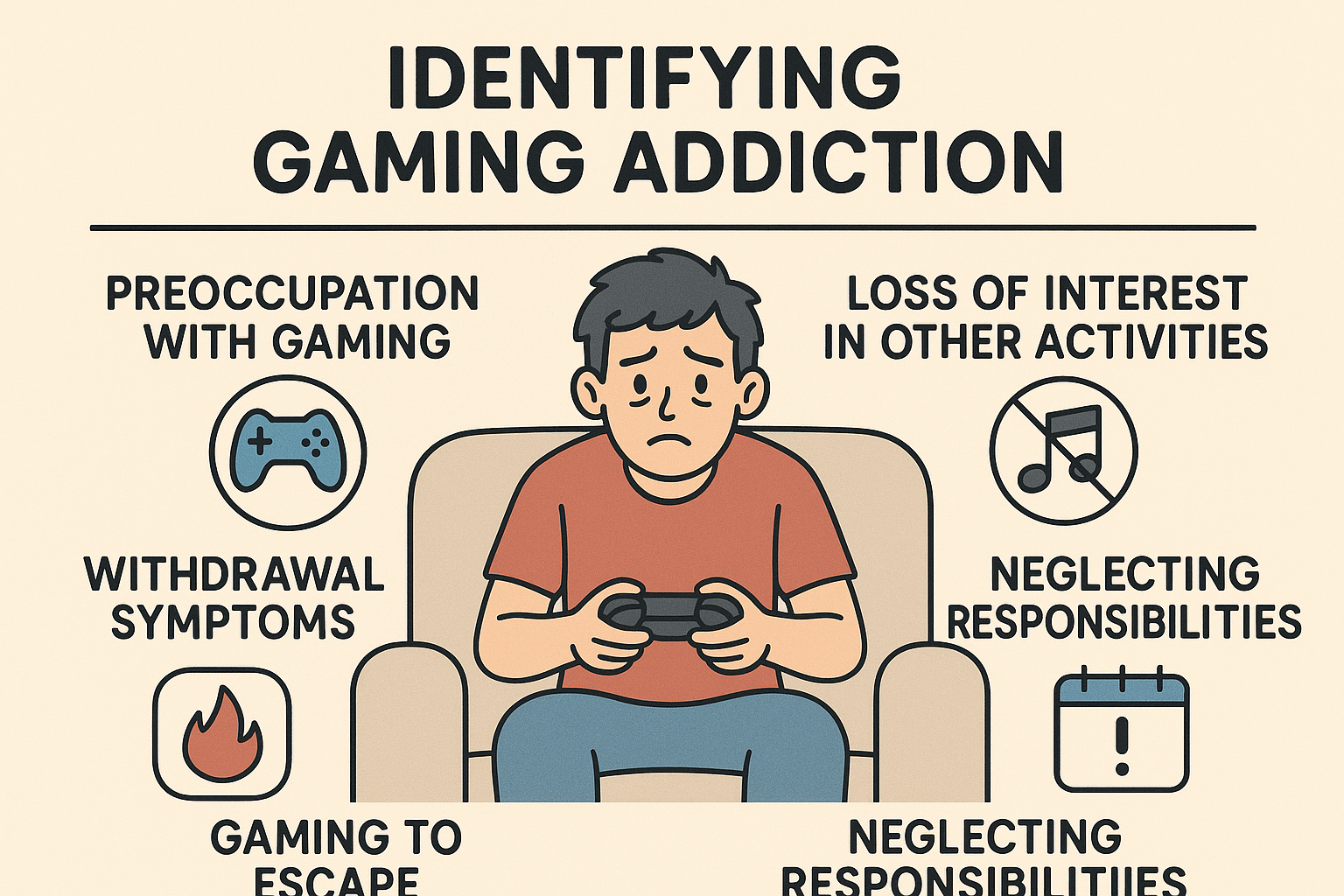
One of the earliest signs is disruption to ordinary routines. Bedtime moves later and later, meals are eaten at the keyboard, and showers or errands slip. When gaming starts to decide the schedule instead of fitting around it, that change deserves attention. Priorities often shift in small steps, so the people around someone may notice the pattern before the person does.
Emotional signs matter too. Irritability, restlessness or sadness when gaming is unavailable can suggest that the activity has become a way of managing stress rather than a choice made for enjoyment. Some people use games to escape from anxiety, low mood, boredom or conflict at home. Using a game to avoid hard feelings is very common, but when it becomes the only reliable source of relief, the pattern is harder to change without support.
Responsibilities often suffer next. Schoolwork slides, job performance drops, bills get paid late, and promises to family are broken. A useful question is whether the person keeps gaming even after these problems have become obvious to them. Continuing despite visible harm is one of the features that separates a heavy habit from a disorder.
Money can be another warning sign. In-game purchases, loot items, subscriptions and expansion packs add up quickly. Someone who spends more than they can afford, hides purchases, or borrows money to keep up with spending needs a closer look. Financial strain is often one of the first consequences families notice.
Social withdrawal is common as well. Gaming can be social, especially with online teams, but it can also replace friends, hobbies and family time. A person who used to see people regularly and now avoids invitations, or who spends most free time alone with a screen, may be showing a change worth discussing.
Physical symptoms can appear over time. Eye strain, headaches, back and neck pain, wrist discomfort and poor sleep are all possible after long sessions. These problems are easy to dismiss. What matters more is whether the person keeps gaming through them, or ignores advice from a doctor or family member to cut back.
Passion or Problem: Questions to Ask
A few simple questions can help sort out whether gaming is a hobby or a concern. Can the person stop when they planned to? How do they react when asked to take a break? Has the time spent gaming grown steadily over the past year? Are work, school, sleep, health and relationships holding up? These questions are not a test to pass or fail, but they give a clearer picture than hours alone.
It also helps to look at the pattern across several months. A busy exam period or a stressful job change can temporarily increase gaming. A sustained shift in how someone lives, with gaming pushing out almost everything else, is different. If you are unsure, a conversation with a doctor, counsellor or addiction specialist can clarify where things stand.
Treatment and Support Options
Treatment for gaming addiction usually focuses on the thoughts and habits that keep the pattern going. Cognitive behavioural therapy is one of the most common approaches. It helps people notice triggers, understand the urges that pull them back to the screen, and build other ways to respond to boredom, stress or loneliness. Sessions often also address sleep routines, daily structure and how to recover from a setback without giving up entirely.
Family involvement often makes a real difference. Parents, partners and siblings can learn how to talk about gaming without constant arguments, how to set limits that are clear and consistent, and how to encourage healthy activities without turning every conversation into a fight. Family therapy can also address conflict that has built up over time.
Some people also have depression, anxiety, attention difficulties or other conditions alongside a gaming problem. Those conditions need their own assessment and care. Any decision about medication belongs to a physician or psychiatrist who can review the person’s full health history. Nobody should start, stop or change a medication based on advice from a forum or social media post.
Peer support groups can help people who feel isolated in their struggle. Hearing from others who have cut back and rebuilt their routines can reduce the shame that keeps many people from asking for help. Support works best when it fits into a wider plan that includes clinical care, family understanding and steady follow-up.
Metamorphosis Centre for Change offers several levels of care, including virtual outpatient care and family support. These options can suit people who need structured help while continuing to work or study. To talk through which level of care fits your situation, visit the contact page or call 705-429-3870.
Frequently Asked Questions
Is gaming addiction a real diagnosis?
Yes. The World Health Organization recognizes gaming disorder as a condition, and clinicians assess it using the criteria in its classification system. A proper evaluation looks at how gaming affects daily functioning over time, not only how many hours someone plays.
Can someone cut back on gaming without treatment?
Some people do reduce their gaming on their own, especially when a clear reason appears, such as a new job or a commitment to a family member. If the pattern has continued for months, if attempts to cut back keep failing, or if other areas of life are suffering, professional support is worth considering.
What if a family member refuses to talk about it?
Stay calm, choose a time when neither of you is angry or exhausted, and focus on specific concerns rather than labels. Describe what you have noticed and how it affects you. You can also seek support for yourself through a counsellor or family program, since change is often easier when the household is involved. If there is any risk of harm, contact a doctor or emergency services right away.