 Metamorphosis Centre for Change
Stopping alcohol or drugs after regular use can bring on physical symptoms, and the first few days are usually the hardest. Many people also feel uncertain about the basics: what happens on arrival, who is watching, what it will cost, whether OHIP pays, and what comes after detox ends.

This guide answers those questions in the order most people need them. It covers what medical detox is, what the first days look like, what medical detox costs at Metamorphosis and how that compares with other private programs in Ontario, which costs OHIP does and does not pay, and the questions to ask before you commit. If you are arranging care for someone else, the sections on preparing your home and family and on starting the admissions call will help you most.
What medical detox is, and what it is not
Medical detox, sometimes called withdrawal management, means withdrawal is monitored and managed by clinical staff. The aim is to help a person move through the physical effects of stopping a substance as safely and comfortably as possible. Those effects vary with the substance, how much and how long it was used, and the person's general health.
Detox is not the same as treatment. On its own, it addresses the body's reaction to stopping. It rarely addresses the reasons substance use started or kept going. For that reason, detox is most useful as a first step. A good detox program plans for what happens next, whether that is residential treatment, outpatient counselling, medication support, or community follow-up.
Length of detox depends on the person. There is no single timetable that fits everyone, so be cautious of any program that promises a fixed number of days before you have been assessed. A proper assessment looks at your history, your current medication, your health, and the substance involved.
Public detox versus private medical detox
Ontario has publicly funded withdrawal management services. These include hospital-based detox units, community withdrawal management centres, and some addiction medicine clinics. Public services are usually free to Ontario residents with a valid health card, but access can involve waiting, and availability varies by region. Some public services require a referral from a physician or nurse practitioner, and some accept self-referral.
Private medical detox is a fee-for-service option. People choose it for faster admission, more privacy, private rooms, and a different level of amenities. Private programs are not covered by OHIP, which is covered in more detail below.
Neither option is automatically better. The right choice depends on how urgently you need a bed, what level of medical monitoring you need, whether you can pay privately or have private insurance, and whether you want a shared or private setting.
The first 72 hours: what to expect
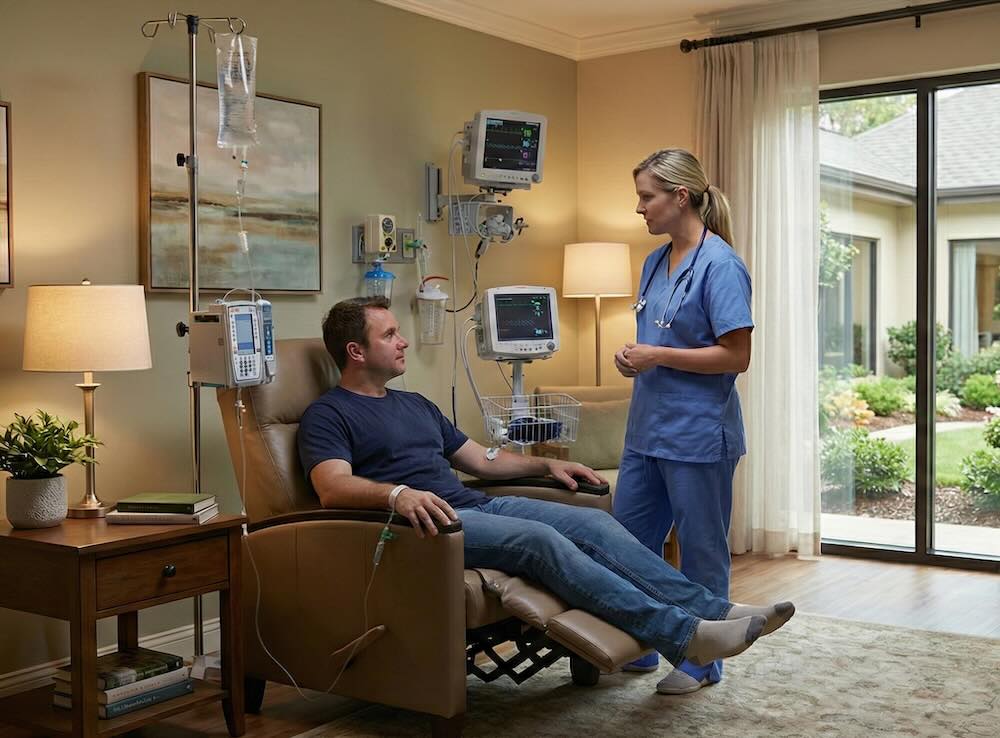
Arrival is usually more practical than people expect. Plan for an intake conversation, a review of your health history, and a discussion of any medication you take. The team will want to know what you have used, when you last used it, and whether you have any existing medical conditions.
The first days often include regular checks of vital signs and symptoms, support with comfort and sleep, and clear communication about what is happening. Ask the team what monitoring is in place overnight, how often you will be checked, and how to reach someone if your symptoms change.
Practical arrangements matter too. Ask what is arranged for your room, meals, phone and internet access, and visits, and ask whether any of it could change during the stay. Most people feel more settled when they know these details early.
Many people also find the first days emotionally hard. Ask the team who provides emotional support during the stay, and whether family members can be kept informed with your permission.
Medical detox costs at Metamorphosis
Metamorphosis publishes its rates in writing. The figures below come from the current price list. All Metamorphosis services are HST exempt.
| Service | Price | Notes |
|---|---|---|
| --- | --- | --- |
| Medical detox, 5-day minimum | $5,000 | Includes medically supervised detox on site |
| Medical detox, each extra day | $1,000 per day | Added when the stay is longer than 5 days |
| Online outpatient program, 4 weeks | $4,975 | Two group sessions per day, Monday to Friday, and three one-on-one therapy sessions per week |
| Online outpatient program, 6 weeks | $7,450 | As above, for six weeks |
| Enhanced aftercare, Option A | $5,250 | 18 one-hour therapy sessions with a master level psychotherapist, 12 weekly counselling sessions, and 3 months of virtual group sessions |
| Enhanced aftercare, Option B | $10,500 | 36 one-hour therapy sessions, 24 weekly counselling sessions, and 3 months of virtual group sessions |
Inpatient residential programs are priced by room type and length of stay. Shared rooms are for men only.
| Room type | 4 weeks | 6 weeks | 8 weeks | 12 weeks |
|---|---|---|---|---|
| --- | --- | --- | --- | --- |
| Shared (2 to 4 people) | $19,900 | $27,200 | $34,600 | $50,300 |
| Semi-private (1 to 2 people) | $24,100 | $33,500 | $43,000 | $62,900 |
| Private (1 person) | $28,300 | $39,800 | $51,400 | $75,500 |
Extra weeks cost $4,190 to $7,075 each, depending on the room type and the length of stay. Hybrid programs combine a stay with outpatient care. A 2-week inpatient stay followed by 2 weeks of outpatient care costs $14,175 in a shared room, $16,275 in a semi-private room, and $18,375 in a private room. Each extra week of inpatient care in a hybrid program costs $4,975 (shared), $6,025 (semi-private) or $7,075 (private), and each extra week of outpatient care costs $2,100.
Graduates of a program of six weeks or longer can return once within one year for two weeks of full programming for $2,000. This is the Meta Safety Net guarantee.
For context, many Ontario sources place private residential rehab for 30 days between about CAD 18,900 and 26,900. A 4-week private room at Metamorphosis sits at the higher end of that range, and a 4-week shared room sits at the lower end. Medical detox at $1,000 per day is within the range most Ontario providers quote for residential detox. Compare the programs on what each includes, not only on the total.
Prices can change, so check the current price list and ask for a written quote before you commit.
What a written quote should show
Ask for a written quote before you agree to anything. A complete quote should set out:
- The number of days it covers, and what happens if the stay is shorter or longer.
- Which clinical services are included, such as assessment, nursing monitoring, and physician access.
- Medication, and whether it is billed separately.
- Laboratory tests or other investigations, and whether they are extra.
- Room type, meals, and any upgrades.
- Travel costs, and any personal expenses that are not covered.
- The deposit amount, when it is due, and whether it is refundable.
- Payment options, including any financing, and what approval depends on.
- What happens after detox ends, and whether a next-stage stay is included or billed separately.
If a provider will not put these details in writing, treat that as a warning sign.
Does OHIP cover medical detox in Ontario?
Short answer: OHIP covers medically necessary detox and withdrawal management delivered through publicly funded programs. It does not cover private residential detox or private residential treatment, including the fee-for-service program at Metamorphosis.
The details depend on the service, and the table below summarizes what the Ontario service listings and provider guides consistently report.
| Service | Covered by OHIP? | What to know |
|---|---|---|
| --- | --- | --- |
| Public withdrawal management (detox) at hospitals and community centres | Yes, usually with no fee to the patient | Listings from Ontario Health atHome show "no cost" or "covered by OHIP". Waitlists can apply. |
| Community addiction counselling and assessment through publicly funded agencies | Yes, usually | Often accessed by self-referral or physician referral. |
| Opioid agonist treatment (methadone or buprenorphine/naloxone) through approved clinics | Generally yes, when prescribed through approved clinics | Some medications are covered by the Ontario Drug Benefit program rather than OHIP, depending on eligibility. |
| Virtual addiction services offered by publicly funded programs | Often yes | Coverage depends on the specific program. |
| Private residential detox and treatment | No | Paid privately, through private insurance, or through financing. |
| Private therapy with psychologists, registered psychotherapists or social workers in private practice | No | Often reimbursed through employer or personal extended health benefits. |
Three practical points follow from this:
- A valid Ontario health card is required for OHIP-covered services. Some public programs also need a referral. Confirm both before you rely on coverage.
- Private insurance may help. Many employer extended health plans and private insurers cover part or all of private treatment. Coverage depends entirely on the policy, so ask your insurer what it pays for, whether it needs pre-approval, and what documents it requires.
- A few private centres work alongside publicly funded programs, and some offer OHIP-funded services on site. Where that happens, the publicly funded part may be covered while amenities and private services are not. Ask the centre which parts are covered and which are billed to you.
Metamorphosis is a private, fee-for-service centre, and OHIP does not cover its addiction treatment program fee.
Questions to ask before you commit
Use these questions on your first call and again before you sign anything:
- How is clinical assessment arranged, and when does it take place?
- Who is on site overnight, and how do I reach them?
- How is the level of monitoring decided, and who reviews it?
- What medication will I receive, who decides on it, and what does it cost?
- What is included in the quoted price, and what is charged separately?
- What happens if my needs change during the stay?
- What is arranged after detox ends, and is it included?
- How are family members kept informed, and what do I need to sign to allow that?
- What is the cancellation and refund policy?
- Can you confirm all of this in writing, including what OHIP and my insurer will and will not cover?
Write the answers down. If you are calling for someone else, the team can explain what they can share and what needs the person's own consent.
Monitoring and safety: what to ask
When a program describes itself as medically supervised, ask what that means day to day. Useful questions include who is on site and in what roles, how often checks happen, how medication decisions are explained, and how you raise a concern about your care. Clear answers to these questions tell you far more than photographs or general reassurance.
Preparing your home and family
A detox stay raises practical questions at home. Who will look after children, pets, bills, or a relative who depends on you? A short written plan helps.
Give each essential task an agreed helper and a backup. Keep a separate list of who needs updates about your care and who only needs practical details. If no one is available for a particular task, say so early so the gap can be planned for.
Starting the admissions call
The first call does not need a full plan. Arrive with a short list of questions and a few basic facts: the substance, how long it has been used, any medical conditions, current medication, and the dates you are considering.
If you are calling for someone else, say so at the start. Ask what the centre can share with you and what needs the person's own consent.
After detox: what comes next
Detox is usually followed by a decision about the next stage of care. That may be residential treatment, outpatient counselling, medication support, or community programs. Before detox ends, ask the team to confirm the next setting, the start date, and the contact details in writing.
Metamorphosis offers a range of next steps, including the hybrid and online outpatient programs and the enhanced aftercare options listed above. Keep a short record for each follow-up appointment: who booked it, where it takes place, when it starts, and what to do if no one has called you back. A referral or a service name alone does not confirm an appointment.
Touring a detox centre
If you visit a facility, look beyond the bedroom. Ask who provides care during the day and overnight, how families stay in touch, how the centre handles emergencies, and what the total costs are. Notice whether staff can explain the care plan clearly. Leave with written answers and a clear next step.
Next steps
If you are considering medical detox in Ontario, start with a conversation. Bring the questions above, ask for a written quote, confirm what OHIP and your insurer will pay, and agree on the next step before you arrive.
To talk through your situation with the admissions team, contact Metamorphosis Centre for Change.
Frequently asked questions
How much does medical detox cost at Metamorphosis?
Medical detox is $5,000 for a 5-day minimum, plus $1,000 for each extra day. Your stay may be longer or shorter depending on your assessment.
How much does a residential stay cost in Ontario?
At Metamorphosis, a 4-week residential stay costs $19,900 in a shared room, $24,100 in a semi-private room, or $28,300 in a private room. Other Ontario providers often quote between about CAD 18,900 and 26,900 for 30 days, so prices vary widely.
Does OHIP cover medical detox?
OHIP covers medically necessary detox and withdrawal management delivered through publicly funded programs, usually with no fee to the patient. It does not cover private residential detox or private residential treatment, including Metamorphosis. You need a valid Ontario health card, and some public services also need a referral.
Is public detox free in Ontario?
Publicly funded detox is generally free to Ontario residents with a valid health card. Access can involve a waitlist, and availability varies by region.
Is private detox faster to access than public detox?
Private programs often offer faster admission than public services, which can involve a waiting list. Availability changes, so ask the admissions team about current bed availability.
Can private insurance pay for medical detox?
Some employer and private insurance plans cover part or all of private treatment. Check your policy, ask whether pre-approval is needed, and ask the centre to help you verify your benefits.
Does OHIP cover methadone or Suboxone treatment?
Opioid agonist treatment delivered through approved clinics is generally covered. Some medications are covered by the Ontario Drug Benefit program rather than OHIP, depending on eligibility.
What happens after medical detox?
Detox is usually followed by a next-stage plan, which might include residential treatment, outpatient care, medication support, or community programs. Ask for the plan in writing before detox ends.
Related reading: costs of private addiction treatment in Ontario and OHIP coverage for addiction treatment.